Table of Contents
- Common Signs of an Electrical Emergency
- When to Call an Electrician vs. Your Utility Company
- What to Do While Waiting for Emergency Electrical Repair
- Residential and Commercial Emergency Electrical Repair Services
- How to Find a Licensed Electrician You Can Trust
- Cost of Emergency Electrical Repair: What to Expect
- Why Hot Shot Electric for 24/7 Emergency Response
- Conclusion
Last Updated: August 13, 2026
An electrical emergency doesn’t wait for business hours. A sparking outlet at midnight, a burning smell from your electrical panel, or a complete power outage can escalate from an inconvenience to a fire hazard within minutes. At Hot Shot Electric Services Co., we’ve responded to hundreds of these situations across the Tulsa metro area. According to the U.S. Fire Administration’s electrical fire data, electrical failures and malfunctions are among the leading causes of residential structure fires in the United States. This guide covers the signs of electrical emergencies, how to stay safe while waiting for help, and what to expect when you call for emergency electrical repair.
Common Signs of an Electrical Emergency
Recognizing the signs of an electrical emergency early is the difference between a repair call and a fire department call.
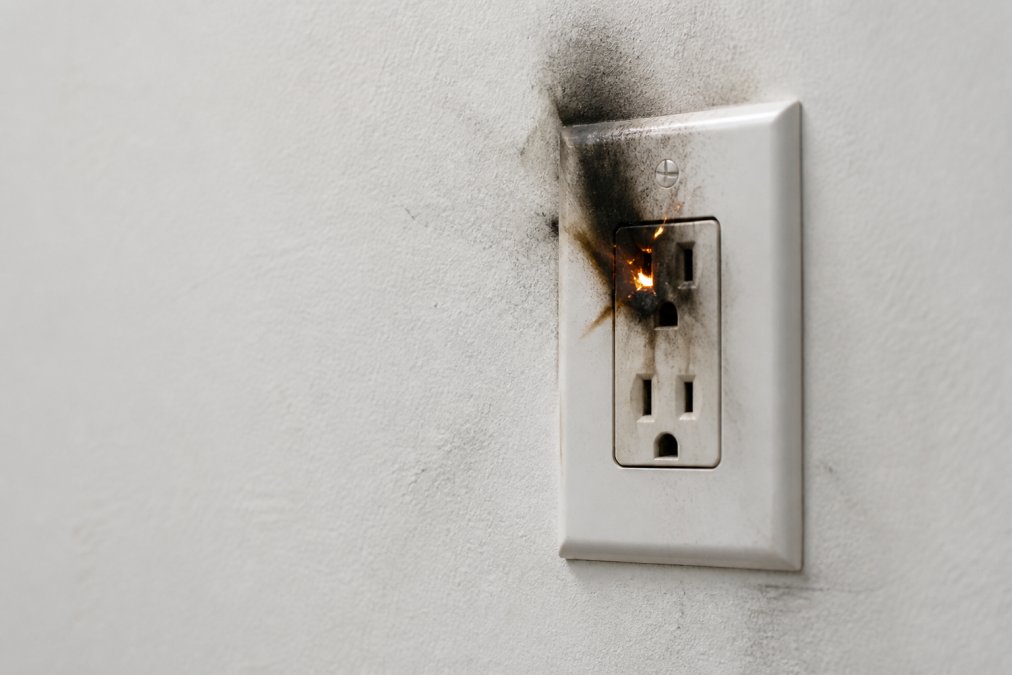
Sparking Outlets and Burning Smells
Sparking outlets are one of the clearest signs of an electrical emergency. Repeated sparking, sparks accompanied by a popping sound, or sparks followed by a burning smell, which often resembles melting plastic or singed rubber, indicate that insulation around your wiring is overheating or already burning. Scorch marks or discoloration around an outlet face are physical evidence of prior arcing. Stop using that outlet immediately, as faulty wiring inside the wall can ignite surrounding materials long before any visible flame appears. A GFCI outlet that trips repeatedly and won’t reset is another red flag, it’s doing its job by shutting down the circuit, but the underlying fault hasn’t gone away.
Frequent Circuit Breaker Trips and Voltage Fluctuations
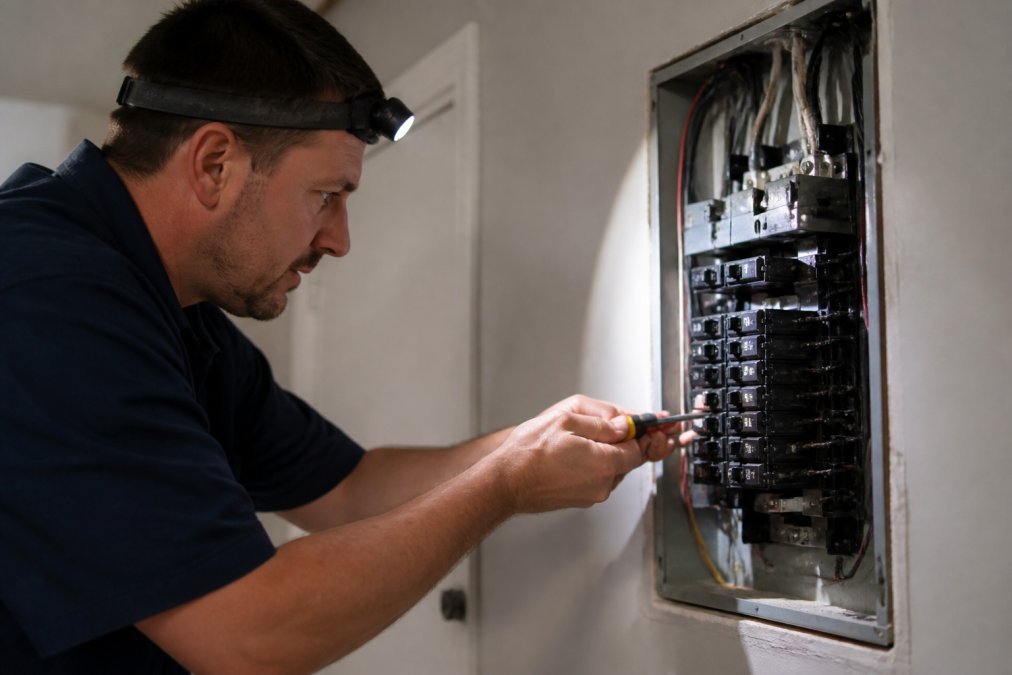
A circuit breaker that trips repeatedly on a normal load, or one that feels warm to the touch or shows any sign of burning at the panel, points to a deeper problem with your electrical infrastructure. Voltage fluctuations, lights dimming or brightening when appliances cycle on, or electronics resetting for no apparent reason, indicate your system may be experiencing electrical surges or unstable connections that can damage equipment and accelerate wiring degradation.
Never reset a tripped breaker more than once without investigating the cause. Forcing a breaker back on when a fault is still present can cause an arc flash or start a fire inside the wall cavity.
When to Call an Electrician vs. Your Utility Company
The dividing line is ownership: your utility company owns the infrastructure up to your meter, while everything on the house side of the meter is your responsibility. Call your utility company for neighborhood-wide power outages, visibly damaged lines running to your home, or meter issues. Call a licensed electrician for everything inside your home: tripped breakers, sparking outlets, burning smells, flickering lights, partial power loss, and any electrical panel issues. A useful test: flip your main breaker off, then back on. If power returns normally, the problem is likely inside your panel. If nothing changes, contact your utility provider first.
What to Do While Waiting for Emergency Electrical Repair
The minutes between calling for emergency electrical repair and the technician’s arrival matter. Identify and isolate the problem circuit by switching off the corresponding breaker, or turn off the main breaker if you’re unsure. Do not use water near any area where electrical hazards are suspected, as water conducts electricity.
DIY Safety Assessment Checklist
Use this checklist while waiting for your electrician:
- Identify which outlets, fixtures, or rooms are affected and note the pattern
- Check your electrical panel for tripped breakers (a tripped breaker sits between ON and OFF)
- Note any burning smell and try to locate where it’s strongest
- Look for visible scorch marks, discoloration, or melted plastic around outlets or switches
- Confirm whether the issue is isolated to your property or affects neighboring properties
- Unplug sensitive electronics from affected circuits
- Keep children and pets away from the affected area
- If smoke or fire is present, evacuate immediately and call 911
- Have your electrical panel location ready to share with the technician
- Note the approximate age of your home’s wiring if you know it
When you call for emergency electrical repair, describe the smell, sound, and location of the problem as specifically as possible. “Burning smell near the kitchen outlet on the north wall” gets a technician to the right place faster than “something smells weird.”
Residential and Commercial Emergency Electrical Repair Services
Emergency electrical repair needs differ significantly between residential and commercial properties, though the underlying electrical safety principles remain the same.
Residential Electrical Repair
Residential electrical emergencies most commonly involve circuit overloads, faulty wiring in older homes, failed GFCI outlets, and electrical panel issues. Homes built before the 1980s often have wiring configurations not designed for modern electrical loads. Aluminum wiring, in particular, requires careful handling because it expands and contracts differently than copper, creating loose connections over time that can arc.
Common residential emergency repairs include tripped or failed circuit breakers, sparking or non-functional outlets, complete or partial power loss to rooms or circuits, wiring damage from water intrusion or pests, electrical panel failures, and GFCI outlet failures in kitchens, bathrooms, and outdoor areas.
Commercial Electrical Troubleshooting
For commercial properties, an electrical emergency carries immediate financial consequences. A failed circuit in a restaurant kitchen, a power outage in a medical office, or a tripped breaker in a data room creates operational disruption that compounds by the hour. Commercial electrical troubleshooting requires familiarity with three-phase systems, higher-amperage service panels, dedicated circuits for specialized equipment, and specific electrical code requirements. According to the National Fire Protection Association’s NFPA 70 (National Electrical Code), commercial installations must meet standards that differ from residential wiring in grounding, conductor sizing, and panel labeling. A common mistake is treating an electrical emergency as an IT or facilities issue rather than a licensed electrical issue, which creates liability and can void insurance coverage.
How to Find a Licensed Electrician You Can Trust
The most reliable way to find a licensed electrician is to verify their license through your state’s contractor licensing board before any work begins. In Oklahoma, the Oklahoma Construction Industries Board’s electrician license verification allows you to confirm that a contractor holds a current, valid license. Beyond licensing, look for proof of general liability and workers’ compensation insurance, transparent pricing with a clear estimate before work begins, experience with your specific issue, and detailed customer reviews that describe specific jobs and outcomes.
Verifying a license takes less than five minutes and protects you from unqualified contractors who can create more damage than they fix. Do it before authorizing any work, even in an emergency.
Cost of Emergency Electrical Repair: What to Expect
The cost of emergency electrical repair varies based on the nature of the fault, the time of day, the complexity of the repair, and the materials required. Emergency calls outside normal business hours typically carry a premium over standard service rates.
| Factor | Impact on Cost |
|---|---|
| Time of call (after hours, weekends, holidays) | Higher service rate |
| Complexity of the fault | More diagnostic time, higher labor |
| Parts and materials needed | Varies by repair type |
| Panel or service upgrade required | Significant additional cost |
| Commercial vs. residential | Commercial typically higher |
Request an upfront estimate before authorizing any work. Reputable electricians will provide this. Be cautious of contractors who refuse to give any estimate before starting or who quote unusually low rates for emergency calls.
Why Hot Shot Electric for 24/7 Emergency Response
Hot Shot Electric Services Co. has been serving the Tulsa metro area, including Broken Arrow, Bixby, and Owasso, for over 30 years. Every technician is licensed and certified. When you call for emergency electrical repair, you’re getting someone who has passed state licensing requirements, carries proper insurance, and has the hands-on experience to diagnose faults accurately the first time.
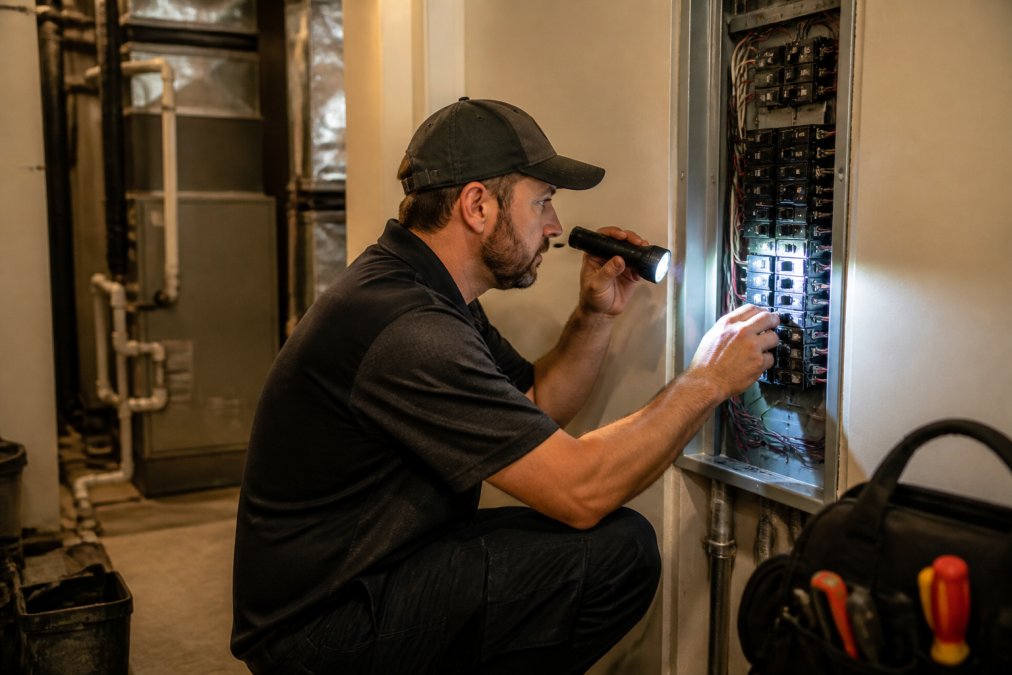
Customer feedback reflects what matters most in an emergency: speed, professionalism, and clear communication. Billy Parker noted "extremely quick response and appointment time. Prompt arrival and quality workmanship." Debra Ellis described a technician arriving within 20 minutes of her call for an estimate. Don Crow highlighted that the team handled his electrical work "very quickly and professionally." Steven Ables specifically appreciated that his technician took the time to explain everything clearly.
Hot Shot Electric handles both residential electrical repair and commercial electrical troubleshooting, with specific expertise in electrical panel upgrades, wiring repair, outdoor electrical installations, and service upgrades. The team has experience with older homes and the specific challenges that aluminum wiring and aging electrical infrastructure present.
For immediate assistance with any electrical emergency, contact Hot Shot Electric Services Co. directly. With 183 Google reviews and more than three decades of experience, the track record speaks for itself.
Electrical emergencies move fast, and the gap between a warning sign and a serious hazard can be measured in hours, not days. Hot Shot Electric Services Co. brings over 30 years of licensed, certified experience to every emergency electrical repair call across the Tulsa metro area, backed by fast response times and transparent communication that customers consistently highlight in their reviews. Contact Hot Shot Electric Services Co. now for immediate dispatch and professional electrical repair you can trust.
Frequently Asked Questions
What qualifies as an electrical emergency?
An electrical emergency is any situation that poses an immediate risk to life or property. This includes sparking outlets, a burning smell from your electrical panel or wiring, repeated circuit breaker trips that won't reset, complete power loss to part or all of your home, visible scorch marks near outlets, or any situation where you suspect faulty wiring. If you're unsure, treat it as an emergency and call a licensed electrician right away rather than waiting.
How much does emergency electrical repair cost?
The cost of emergency electrical repair depends on the nature of the problem, the parts required, the time of day, and how long the repair takes. After-hours and weekend calls typically carry a higher service rate than standard business-hour visits. Because every situation is different, the best approach is to contact your electrician directly for an accurate estimate. Hot Shot Electric offers competitive pricing, call or reach out online for a quote specific to your situation.
Is a power outage considered an electrical emergency requiring an electrician?
Not always. A neighborhood-wide power outage is typically a utility company issue, and you should contact your utility provider first. However, if only your home or business has lost power and your neighbors still have electricity, the problem likely lies in your electrical panel, service entrance, or internal wiring. That situation requires a licensed electrician, not the utility company. If you're unsure who is responsible, call your utility provider first, they can confirm whether the outage is on their end.
Can a handyman do electrical work in Oklahoma?
No. Oklahoma law requires electrical work to be performed by a licensed electrician. Unlicensed electrical work can void your homeowner's insurance, fail inspections, and create serious safety hazards. When hiring for any electrical repair, especially an emergency, always verify that the technician holds a valid Oklahoma electrical license. You can check license status through the Oklahoma Construction Industries Board before work begins.
This article was written using GrandRanker