Indoor vs. Outdoor Extension Cords
This is probably the most critical question to answer. While most of your indoor décor is a garland, ornaments, trees, and other festive knick-knacks, there is also the light on the trees and in other places. So having a sound knowledge of indoor cords is a must.
Outdoors, this is the opposite. Almost everything must be plugged in outside. There are usually a limited number of outlets outside, as well. So, various lengths of extension cords will be used to not overload a single outlet. These cords must also be sufficient to power the decoration, so you will need to know what gauge is needed. And, of course, it is outside, so an outdoor extension cord is necessary. There is a lot to know when choosing the correct cord.
The first hurdle is to know the difference between indoor and outdoor extension cords. Choosing the wrong one could be dire.
Indoor extension cords are usually shorter in length and thinner. This means that they have a lighter gauge of wire inside. A lower gauge of wire means they are not as powerful as the outdoor cords. These extension cords allow you to reach that outlet to power the lights on the tree or the line across your banister. You would never want to use this outdoors, though.
The outdoor extension cords must be able to withstand the elements. Indoor cords are not designed to do this. All outdoor extension cords will have a thicker, more durable protective insulation layer. They also come in various lengths, usually 25, 50, 100, and 150 feet. This helps when trying to reach those outdoor outlets that are not near your decorations.
It is imperative to choose the correct indoor or outdoor extension cord. One thing to remember is that outdoor extension cords can be used inside, but indoor cords cannot be used outside.
How to Determine What the Extension is Best Used For
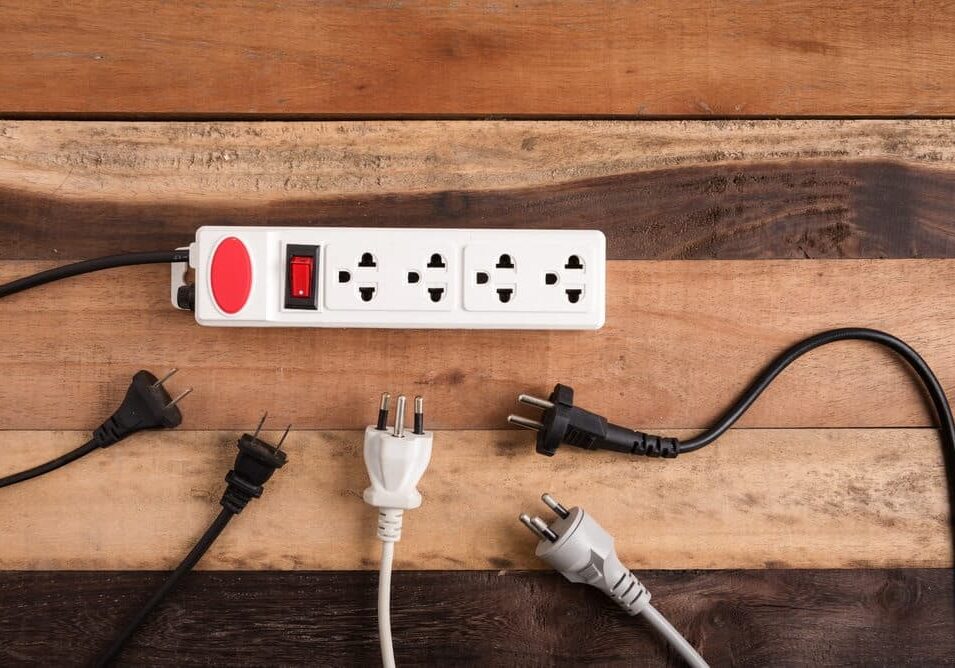
Every extension cord has designation lettering on the protective sleeve. This will help you determine what this cord was designed for. The designation depends on the type and gauge of wire used inside the cord. The list below will help you pick the correct extension cord:
- “S” – this cord is flexible and designed for general use.
- “W” – this cord is rated for outdoor use
- “J” – this cord has standard 300-volt insulation. If no J is in the designation, the cord has thicker, 600-volt insulation designed for heavier use.
- “P” – this cord has a parallel wire construction, used in air conditioner cords and household extension cords
- “T” – this cord jacket is made from vinyl thermoplastic
- “E” – this cord jacket is made from thermoplastic elastomer rubber (TPE)
- “O” – this cord is oil-resistant.
- “FT2” – this cord is flame retardant.
- “CL2S” – this wire is designed for in-wall construction.
- “SRDT” – this wire is heavy duty and suitable for high amperage products.
- “HPN” – this cord’s performance won’t be affected by the high temperatures associated with appliances.
So, now you know what those numbers and letters on the side of the extension cords tell you.
Use this information to ensure that you choose the right extension cord for your job.
The Best Uses for Different Length Cords
Let’s discuss the different lengths of extension cords and how it affects functionality. The standard lengths are 25, 50, 100, and 150 feet extension cords. These lengths come in different gauges, as well. The standard gauges of wire used in these extension cords are 16-, 14-, 12-, and 10-gauge. The combination of length and gauge will affect how much amperage you will get from the cord.
The longer the cord, the more of an amp drop you will get. This means that you might be getting 20 amps from the outlet, but you will only get a percentage of that for the decoration, power tool, or any other things being powered. This amp drop is not too severe. You will look at anywhere from 1% to 5% of an amp drop, with 1% being shorter cords and 5% with the more extended variety.
The gauge of the wire inside the cord will also play a significant factor in amps being allowed to run through the cord. Without the correct amps, the appliance, tool, or decoration you are trying to power will not function properly.