

Table of Contents
- Why Businesses Need Reliable Electrical Contractor Alternatives
- Key Services to Evaluate in an Electrical Contractor
- Commercial Electrical Services and Specializations
- Average Cost for Kitchen Rewiring and Budget Planning
- Electrical Safety Inspection for Businesses: What to Expect
- How to Vet Contractor Qualifications and Licensing
- Emergency Response and Preventative Maintenance Plans
- Conclusion
Last Updated: August 18, 2026
Why Businesses Need Reliable Electrical Contractor Alternatives
Merit shop contractors now account for approximately 81% of the electrical contracting market, representing an estimated $232 billion in annual industry revenue, yet many business owners remain locked into relationships with a single provider. When your primary contractor is unavailable, overbooked, or underperforming, your operations stall. Finding qualified electrical contractor alternatives isn’t about shopping for the cheapest bid, it’s about building a network of vetted professionals who understand your needs, respond quickly to emergencies, and deliver consistent workmanship.
The stakes are higher for businesses than homeowners. Downtime costs money. According to Global Market Insights analysis of electrical services demand, the commercial electrical services market was valued over $25 billion by 2024 and is accelerating as businesses invest in infrastructure upgrades, energy efficiency, and new technology. This demand means more contractors are entering the market, but quality varies dramatically.
Hot Shot Electric Services Co. has spent over 30 years building expertise across Tulsa, Broken Arrow, Bixby, and Owasso, focusing on breaker box upgrades, outdoor living installations, EV charger setups, and preventative maintenance programs. But even the best single contractor has limits. This guide walks you through what to evaluate in electrical contractor alternatives, how to assess qualifications, and how to structure maintenance agreements that prevent emergencies.
Key Services to Evaluate in an Electrical Contractor
When comparing electrical contractor alternatives, focus on whether they deliver the specific services your business needs. A competent electrical contractor should handle: emergency electrical repair, preventative maintenance inspections, electrical panel upgrades, commercial lighting design and installation, and wiring installation for new construction or renovations. Beyond basics, look for contractors who specialize in your industry vertical, a contractor experienced in food service understands different load requirements than one focused on office buildings.
Ask directly: What’s your experience with projects like mine? How many have you completed in the last two years? Can you provide references from similar businesses? Specificity signals competence. If a contractor can’t name three recent projects matching your scope, move on.
Commercial Electrical Services and Specializations
Commercial electrical services differ fundamentally from residential work. The voltage is higher, code requirements are stricter, equipment costs more, and failures impact entire business operations. The most important commercial electrical services fall into three categories: infrastructure upgrades (panel replacements, distribution system modernization, EV charging stations), preventative maintenance (scheduled inspections, load testing, thermal imaging), and emergency response (24/7 availability, documented SLAs, rapid dispatch).
Hot Shot Electric Services Co. specializes in these areas for commercial clients, with expertise in outdoor living space installations, breaker box upgrades, and preventative maintenance programs designed to minimize operational disruption. When evaluating alternatives, ask about their commercial project portfolio, emergency response SLAs, and whether they offer maintenance plans that include scheduled inspections. A contractor who only responds to emergencies is reactive, not a partner.
Average Cost for Kitchen Rewiring and Budget Planning
Kitchen rewiring typically involves upgrading circuits for modern appliances, installing GFCI protection near water sources, running new conduit if old wiring is unsafe, and potentially upgrading the main panel. In older commercial kitchens, you might encounter aluminum wiring (a safety hazard requiring replacement), outdated grounding systems, or deteriorated conduit.
According to the Energy Efficiency Movement report by ABB, 99% of businesses are investing in or planning energy efficiency improvements. Kitchen upgrades often tie into broader facility efficiency projects. Bundling kitchen rewiring with panel upgrades, LED lighting conversion, or smart circuit management can spread costs and improve ROI.
Rather than asking "How much does kitchen rewiring cost?" ask: "What’s included in your estimate? Are you handling permits and inspections? Do you offer a payment plan? What’s your warranty?" Request detailed written estimates from at least two contractors, comparing what’s included rather than just price.
Kitchen rewiring costs require a site inspection. Get detailed written estimates from multiple contractors, compare what’s included, and prioritize safety and code compliance over lowest price.
Electrical Safety Inspection for Businesses: What to Expect
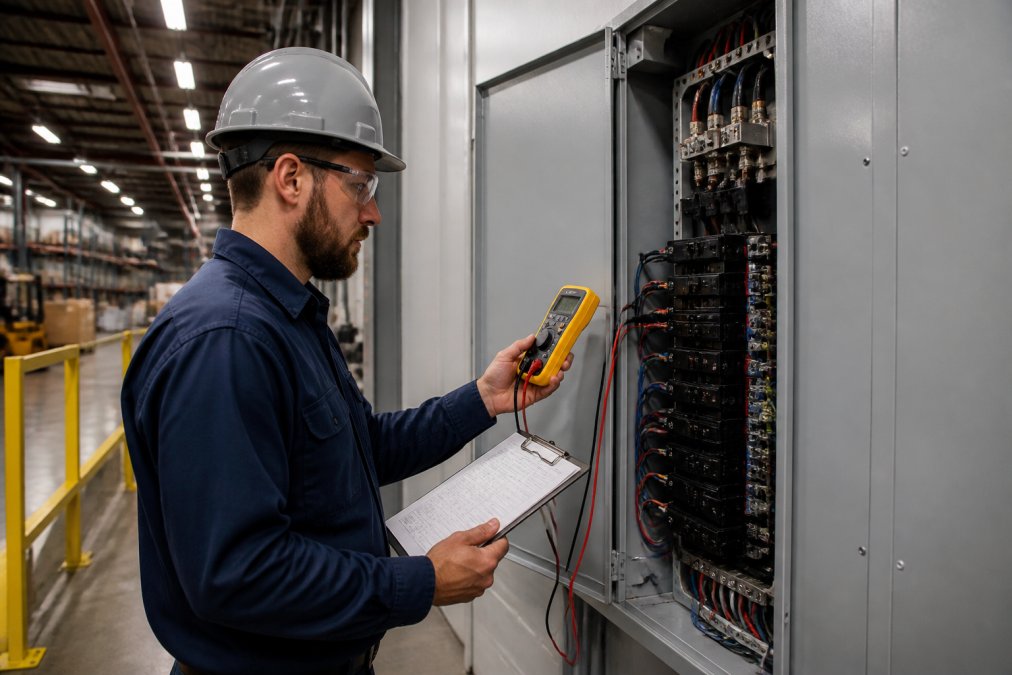
An electrical safety inspection is a legal requirement under the National Electrical Code, required by insurance carriers, and essential for preventing fires, electrocution, and equipment damage. A professional inspection includes a visual walkthrough of panels, circuits, outlets, fixtures, conduit, and grounding systems, using testing equipment to measure voltage, check grounding, identify thermal issues, and verify circuits are properly labeled and within safe load limits.
The inspection produces a detailed report documenting findings, code violations, and safety risks prioritized by urgency. Critical issues get flagged for immediate attention; secondary issues get scheduled into a maintenance plan. The report becomes your roadmap for prioritizing electrical work and managing risk.
According to WiseGuyReports analysis of energy management adoption, approximately 68% of commercial buildings in the U.S. use energy management systems, reducing energy consumption by 34%. Buildings with documented electrical systems and regular inspections outperform those without. A professional inspection gives you that measurement baseline.
Inspections typically take 2-4 hours depending on facility size. Many insurance companies offer premium discounts for documented regular inspections, with savings often offsetting the inspection cost within one year.
How to Vet Contractor Qualifications and Licensing
Every electrician working on commercial projects must hold a valid journeyman or master electrician license issued by your state. Verify this directly with the licensing board. In most states, you can search the licensing database online. Write down the license number and confirm the contractor’s scope of work matches their license type.
The contracting company must carry appropriate business licenses and insurance. General liability insurance protects you if someone is injured on your property. Workers’ compensation insurance covers the contractor’s employees. Ask for a certificate of insurance listing your business as an additional insured.
Check for disciplinary history through state records. A contractor with a clean record is a good sign; multiple complaints or violations indicate reliability or safety issues.

Ask for references and call them. Ask specific questions: Did they finish on time? Stay within budget? How did they handle problems? Would you hire them again? References from similar businesses are most valuable.
Hot Shot Electric Services Co. holds required licenses for commercial work across the region, maintains appropriate insurance coverage, and has built a reputation based on consistent workmanship and professional conduct. When evaluating any contractor alternative, these credentials and references are your first filter.
Hiring an unlicensed electrician for commercial work violates electrical code and voids your insurance coverage. If something goes wrong, you’re liable. Always verify licensing before signing a contract.
Emergency Response and Preventative Maintenance Plans
Most businesses treat electrical contractors as emergency responders instead of partners. A preventative maintenance plan is a contract for scheduled inspections, documented maintenance, and priority response when emergencies occur. It’s the difference between managing risk and reacting to crises.
A solid preventative maintenance plan includes quarterly or semi-annual inspections, load testing on critical circuits, thermal imaging to detect early warning signs of failure, documentation of all maintenance work, and a guaranteed response time for emergencies (typically 2-4 hours for critical failures). The contractor becomes familiar with your facility and can spot problems before they cascade into shutdowns.
The cost of preventative maintenance is a fraction of emergency repairs plus downtime. A circuit failure requiring a 3 AM emergency call, expensive rush repair, and facility shutdown costs far more than a quarterly inspection catching the problem during business hours. According to IECI workforce research on electrical contractor capabilities, merit shop contractors increasingly focus on developing long-term service relationships with commercial clients, not just one-off projects.
When evaluating contractor alternatives, ask about maintenance plan options, response time guarantees for emergencies, dedicated account contacts, and flexibility around your facility’s operating schedule.
Structure your maintenance plan to include thermal imaging inspections at least annually. Thermal imaging detects loose connections and corrosion before they fail, often preventing expensive emergency repairs and facility downtime.
Comparison of Electrical Contractor Alternatives
When evaluating electrical contractor alternatives, focus on: years of commercial experience, range of services offered, documented emergency response times, licensing and insurance verification, customer references from similar businesses, maintenance plan options, and pricing transparency.
| Evaluation Criterion | What to Look For | Red Flags |
|---|---|---|
| Commercial Experience | 5+ years with projects similar to yours; specific examples | Vague references; mostly residential background |
| Licensing & Insurance | Current state license verified; proof of liability and workers comp | Unlicensed; no insurance documentation |
| Emergency Response | Documented SLA (2-4 hours typical); 24/7 availability claim | No commitment on response time |
| References | 3+ recent commercial clients willing to discuss experience | Refuses references; only generic testimonials |
| Maintenance Plans | Scheduled inspections, thermal imaging, documented records | Reactive-only; no preventative offerings |
| Pricing | Detailed written estimates; transparent cost breakdown | Vague quotes; pressure to decide quickly |
| Project Management | Clear timeline, communication plan, change order process | No documentation; unclear scope boundaries |
Hot Shot Electric Services Co. meets these criteria: 30+ years of commercial experience, licensed and insured, strong local references, and structured maintenance plans designed to prevent downtime. The company’s focus on outdoor living installations and breaker box upgrades reflects specialization in areas where they’ve developed deep expertise.
When comparing alternatives, don’t default to lowest price. The cheapest contractor often cuts corners on safety, uses less experienced technicians, or underestimates scope. Mid-range pricing from a contractor with strong references and documented processes typically delivers better value.
Finding the right electrical contractor alternative requires verifying licensing, checking references from similar businesses, evaluating maintenance plan options, and structuring a relationship around prevention rather than emergency response. The electrical services market is growing at 6.3% annually, driven by infrastructure investment and modernization. Your job is to identify contractors who understand commercial electrical systems, maintain professional standards, and prioritize your facility’s reliability. Hot Shot Electric Services Co. has built that reputation across the region through consistent workmanship and customer-focused service. When evaluating alternatives, use the same standards: experience, qualifications, response capability, and references. Start with a detailed electrical safety inspection, establish a preventative maintenance plan with a contractor you trust, and build a network of qualified alternatives so you’re never dependent on a single provider.
Frequently Asked Questions
What should I look for when hiring a commercial electrical contractor?
Verify licensing, insurance, and certifications with your state's electrical licensing board. Request references from recent commercial projects and ask about their experience with your specific electrical needs, whether that's panel upgrades, rewiring, or preventative maintenance. Check response times for emergencies and ask about service level agreements. A qualified electrical contractor should provide detailed project estimates, explain code compliance requirements, and offer workmanship guarantees.
How do I verify the licensing and insurance of an electrical company?
Contact your state's licensing board or department of labor to confirm the contractor holds a valid license. Ask for proof of general liability insurance and workers' compensation coverage before work begins. Request their license number and verify it independently, never rely solely on what they provide. Licensed electricians are required to comply with electrical code standards and maintain current certifications. This verification protects your business from liability and ensures safe, compliant installations.
What is the average cost for kitchen rewiring in a commercial space?
Kitchen rewiring costs depend on circuit complexity, existing infrastructure, code upgrades needed, and whether the space requires specialized outlets for commercial equipment. A full kitchen rewiring typically involves new circuits, panel modifications, and safety inspections. Pricing varies significantly based on your location and project scope. Contact a licensed electrical contractor for a detailed estimate, they'll assess your current wiring, determine code requirements, and provide transparent pricing that reflects the true scope of work.
How often should commercial properties undergo electrical safety inspections?
Most commercial properties should have electrical safety inspections annually, though high-demand facilities may need them more frequently. Inspections identify aging wiring, overloaded circuits, code violations, and fire hazards before they cause outages or safety issues. After major renovations or equipment additions, a safety inspection ensures new installations meet current electrical codes. Regular inspections reduce operational disruption, lower insurance premiums, and protect employee safety. A licensed electrician will document findings and recommend upgrades to keep your electrical infrastructure reliable.
What are the benefits of choosing a local electrical contractor over a large firm?
Local electrical contractors typically offer faster response times, personalized service, and familiarity with regional electrical codes. They understand local building requirements and can respond to emergencies quickly without long dispatch delays. Established local contractors build relationships with their communities and depend on reputation and customer satisfaction. Many offer preventative maintenance plans tailored to your facility's needs. Local contractors often provide competitive pricing and can explain their work in detail, ensuring you understand the project scope and costs.
This article was written using GrandRanker