

You know that feeling when a room just works? It’s not too bright or too dark. That’s ambient lighting doing its job. Here’s the deal: most homes only have one overhead light. That creates harsh shadows and flat rooms. In many homes, that single fixture creates harsh shadows and flat rooms. Almost everyone gets this wrong. Ambient lighting is the base layer of any good indoor lighting design.
Think soft, general lighting that fills the whole space. No hotspots. No dark corners. It’s the foundation you build on. Without it, your living room feels like a waiting room. Your bedroom feels like a cave. This guide covers what ambient lighting is, why you need it, and when to call an electrician for a proper home lighting setup.
What Exactly Is Ambient Lighting?
Ambient lighting means overall room illumination. It replaces natural sunlight after dark. Ceiling fixtures, recessed lights, and wall sconces create it. You want even coverage without glare. Think of it as the background music of your lighting layers. Not too loud, not too quiet. You may have seen Florida snowbirds install tiny track lights and wonder why their condo feels cold. Wrong move. Proper ambient lighting bounces off walls and ceilings. It makes spaces feel bigger. That’s visual comfort right there. Get this base layer right, and everything else gets easier.
Why Your Broken Arrow Home Feels “Off” Without It
Single overhead fixtures kill the vibe. They cast light straight down. Your ceiling stays dark. Corners stay dark. Faces look weird. Professionals have fixed this exact problem for families in the Oakbrook neighborhood. They add lamps but still feel off. That’s because they lack general lighting from the ceiling. Ambient lighting spreads light everywhere. It fills shadow zones. Broken Arrow homes with open floor plans suffer most. One kitchen light can’t cover the whole great room. You end up squinting at dinner. Good ambient lighting solves that. No more dark hallways. No more reading lamps on full blast just to see the couch.
The Three Layers of Lighting
Professional indoor lighting design uses three layers. Ambient lighting is the base. Task lighting helps you read or cook. Accent lighting shows off art or plants. Most people only buy task lamps. Then they wonder why the room still looks bad. You need all three. Ambient first.
Then add a floor lamp for reading. Finally, point a small light at that painting you love. Many homeowners in Florida’s Cape Coral have done this for under $200. The difference shocks them. Bedroom ambient lighting alone makes falling asleep easier. The living room’s ambient lighting makes movie nights cozy. Start with the base layer.
Top Benefits of Ambient Lighting
Visual comfort tops the list. No eye strain after dark. Your pupils stop constantly adjusting. Energy efficient lighting comes next. One well-placed ambient fixture uses less power than five table lamps. You also get better mood lighting. Soft, even light reduces stress. This is especially clear in Broken Arrow basements converted into rec rooms. Families hang out there more after adding good ambient light.
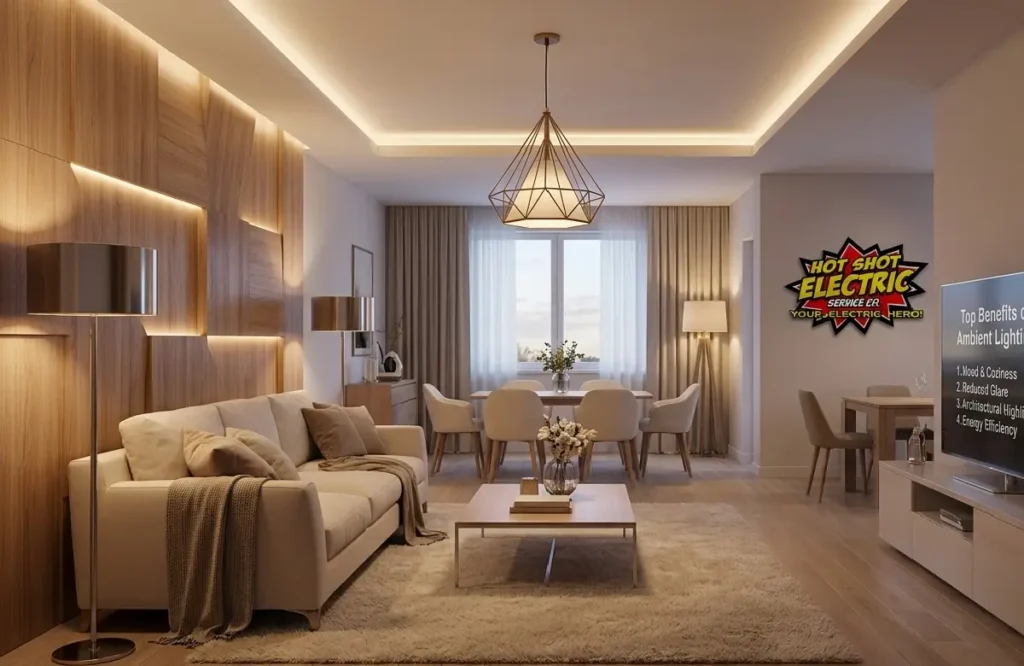
Another benefit? It highlights your home’s best features without trying. Vaulted ceilings pop. Crown molding casts nice shadows. Florida retirees love this for their open-concept villas. Finally, good ambient lighting increases home value. Buyers notice welcoming rooms.
How to Add Ambient Lighting Room by Room
Living room ambient lighting: Use recessed lights on a dimmer. Space them 4–6 feet apart. Point them at walls, not floors. That bounces light softly.
Bedroom ambient lighting: Avoid overhead fixtures directly above the bed. Use wall sconces or a flush-mount ceiling light off-center. You want soft illumination for winding down.
Kitchen ambient lighting: Under-cabinet lights don’t count. Add wafer LEDs in the ceiling’s center. Pair with pendant lights over islands.
Bathrooms: Use a ceiling fixture plus a lighted mirror. No more shaving in the shadows.
These setups have worked well for Broken Arrow families. The kids stop fighting about brightness levels. Worth every penny.
LED Ambient Lighting: The Smart Choice
LED ambient lighting wins every time. It runs cool. It lasts 20,000 hours. It uses 75% less energy than old bulbs. No more climbing ladders to change recessed lights. Florida homes bake in summer heat—LEDs handle it fine. They also dim smoothly. Cheap LEDs flicker. Buy name brands like Philips or Cree. For a typical Broken Arrow living room, you need about 1,500 lumens total. Spread across three or four fixtures. Color temperature matters too. Pick 2700K to 3000K for warm, cozy light. Avoid 4000K—that’s office lighting. You’re not a cubicle.
When to Call an Electrician for Home Lighting Setup
DIY works for plug-in lamps. But permanent ambient lighting needs wiring. You install recessed cans. You run new circuits. You add dimmer switches. That’s an electrician’s work. Some Florida homeowners have cut holes in ceilings and hit joists. Bad day. Check on Google a residential lighting Tulsa pro (or Broken Arrow electric service) when you want ceiling fixtures where none exist. They handle junction boxes, wire runs, and permits. They also solve voltage drop issues for long runs. Expect to pay $150–$300 per fixture installed. Worth it for safety alone. Don’t mess with live wires. Get three quotes. Ask about energy-efficient lighting upgrades, too.
Common Ambient Lighting Mistakes
Mistake #1: One fixture for a big room. A single ceiling fan light won’t cut it. Add four to six recessed lights instead.
Mistake #2: No dimmers. Ambient lighting needs dimmers. Full brightness feels like a hospital. Dimmers cost $20 each. Install them everywhere.
Mistake #3: Wrong bulb temperature. Mixing 2700K with 5000K looks terrible. Pick one warmth for the whole room.
Mistake #4: Placing lights too far apart. Eight feet max between recessed cans. Professionals have fixed this in Florida condos where owners tried to save money. They ended up with dark spots.
Avoid these, and your home lighting setup will shine.
FAQ
Is ambient lighting the same as general lighting?
Yes, basically. General lighting is another name for ambient lighting. It provides overall room illumination. Task and accent lighting do different jobs. Start with ambient, then layer the others.
How many lumens do I need for living room ambient lighting?
Multiply your room’s square footage by 20. A 300-square-foot living room needs 6,000 lumens total. Spread that across multiple fixtures. Use dimmers to adjust brightness down.
Can I use floor lamps for ambient lighting?
Yes, if they point at the ceiling. Up-lighting works great. But table lamps aimed at chairs? That’s task lighting. Real ambient lighting comes from overhead or wall-mounted fixtures. Mix both for best results.
What color temperature works best for bedroom ambient lighting?
2700K. That’s warm white, like old incandescent bulbs. It feels calm and sleepy. 3000K works for bathrooms or kitchens. Never go above 3000K in bedrooms unless you want to feel wired at midnight.
How do I fix a room that still feels dark after adding ambient lights?
Check your wall and ceiling colors. Dark paint absorbs light. Paint ceilings white or off-white. Add mirrors to bounce light around. Professionals have fixed dark Florida living rooms just by swapping beige walls for soft white.
Do I need an electrician to add dimmer switches?
Yes, unless you feel comfortable swapping switches. Dimmers require a neutral wire in most modern homes. Old homes might lack that. A licensed electric service in Broken Arrow can check and install safely. It’s a one-hour job.
What’s the cheapest way to add ambient lighting?
Plug-in wall sconces. They hang like pictures but have cords. Run cords behind furniture. Or use smart bulbs in existing fixtures. Set them to warm white and 50% brightness. Not perfect, but better than nothing.
Conclusion
Ambient lighting changes how you live at home. No more harsh shadows. No more dark corners. Just soft, even light everywhere. Start with one room — your living room or bedroom. Add dimmable LED fixtures. Call an electrician for permanent wiring. Many Broken Arrow families have finally enjoyed their basements after adding proper ambient lighting. Florida retirees stop complaining about reading strain. It works.
Your next step: Walk through your home at 8 PM. Turn off all lamps. Leave only ceiling lights on. Notice the dark spots? That’s your ambient lighting failing. Fix those spots first.
For simple lamp additions, DIY. For new ceiling fixtures, call a pro. Search for “electric service Broken Arrow” or “residential lighting Tulsa.” Ask about LED ambient lighting upgrades. Get a quote. You’ll wonder why you waited so long.