Straight answer
Is a warm or discolored outlet dangerous?
Short answer
Yes, treat it as urgent. A warm cover plate, brown or black marks, crackling or a hot-plastic smell mean heat at a loose or overloaded connection. Unplug everything from it, turn off that breaker if you can do it safely, and call. If you see smoke or flames, leave and call 911.
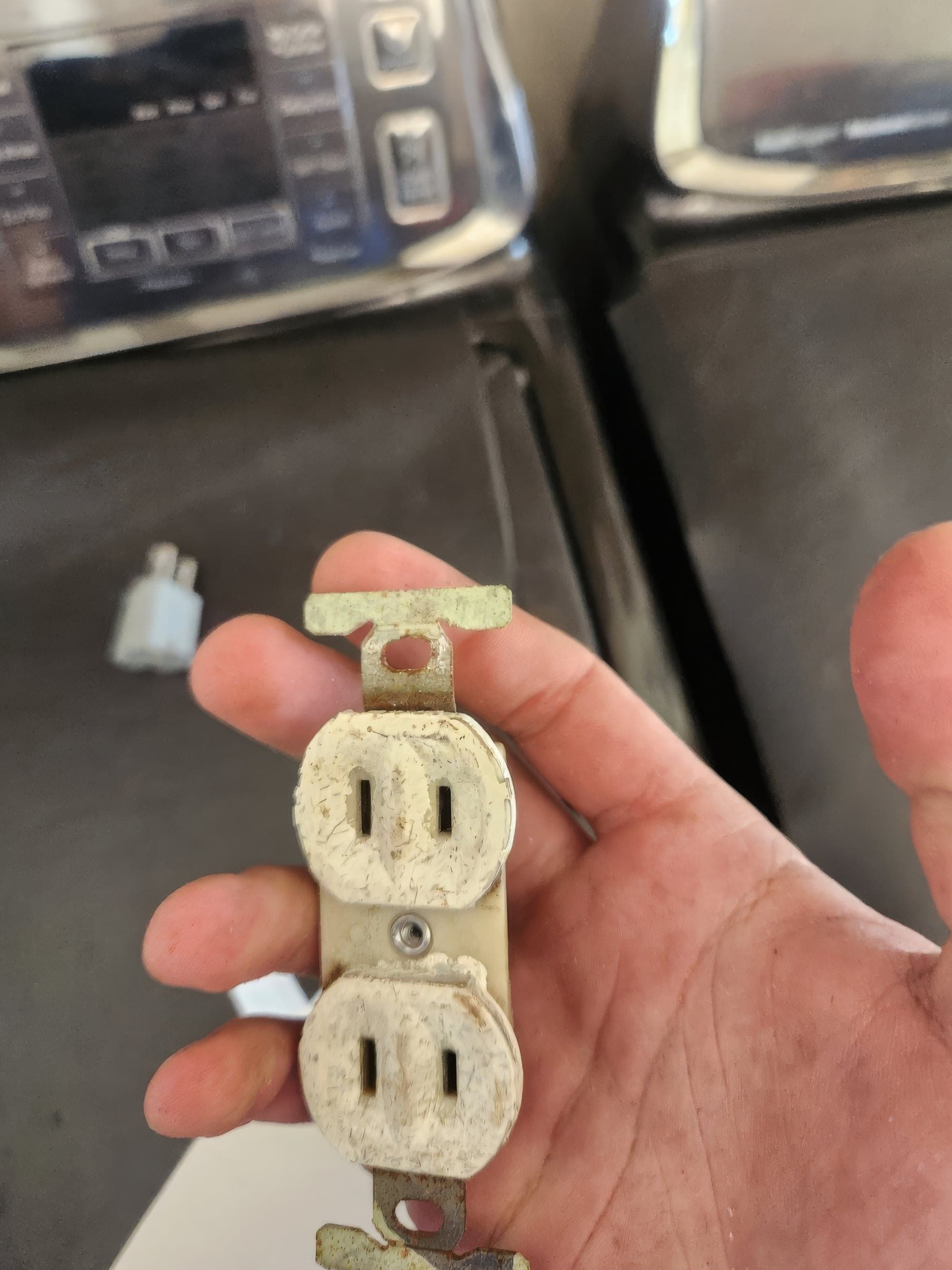
An outlet that is sparking or smoking is one of the most urgent calls Hot Shot Electric Service Co. gets during the day. It is not usually the outlet failing on its own. It is heat building at a connection that should be tight.
Why outlets get hot
- Backstabbed connections. Many outlets are wired by pushing the wire into a hole in the back instead of wrapping it around a screw. Over years those connections loosen, and a loose connection makes heat.
- The first outlet in the chain. Outlets in a room are usually daisy-chained, often around ten on a circuit. The first one carries the current for all the others, so a weak connection there can heat up even with nothing plugged into it.
- Overload. A space heater or window unit on a shared circuit can run an outlet near its limit for hours.
- Aluminum branch wiring. Homes built roughly between the late 1960s and mid 1970s may have aluminum wiring, whose connections loosen as the metal heats and cools. More on aluminum wiring.
What we do
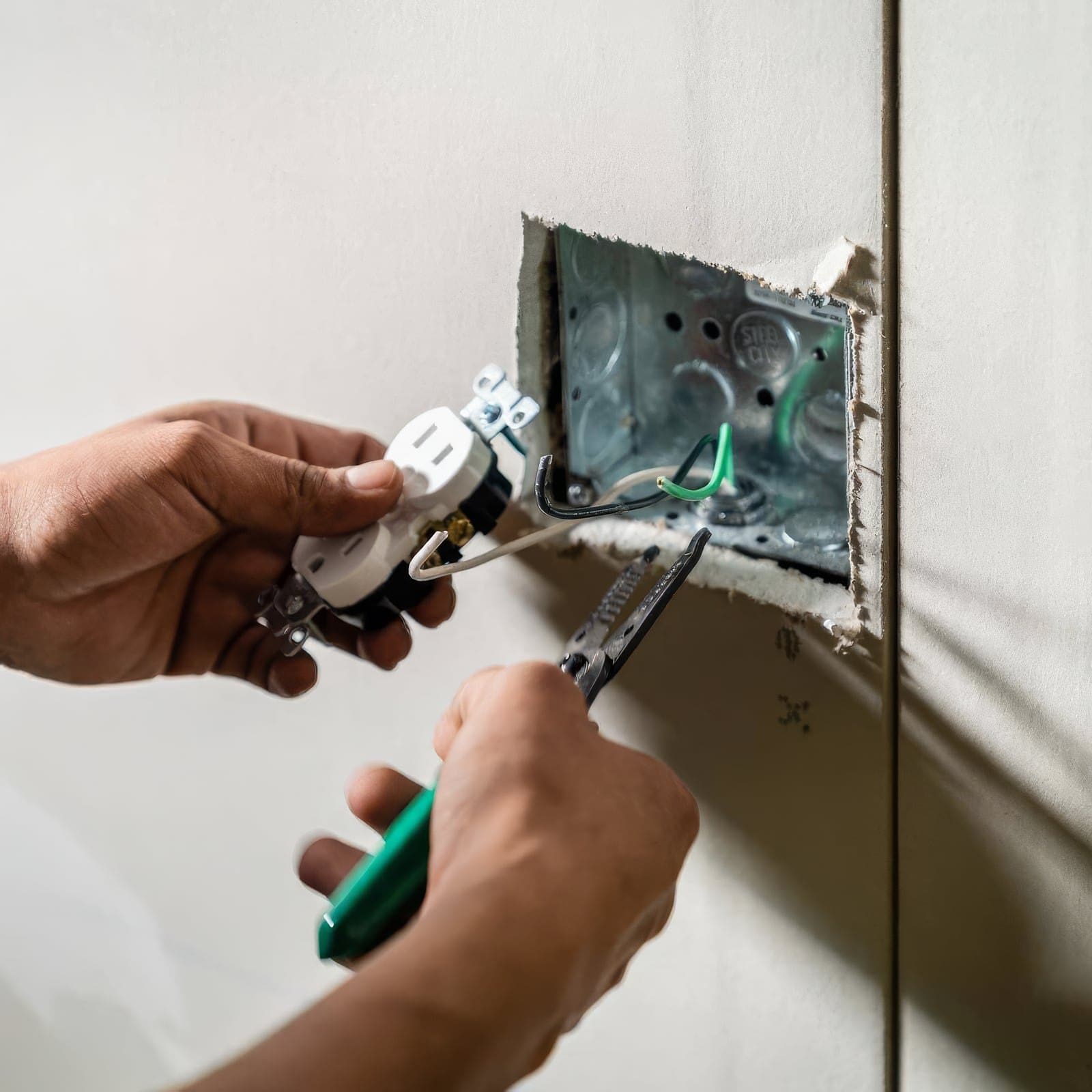
A licensed journeyman opens the outlet and the ones around it on the same circuit, checks every connection, and replaces damaged outlets with properly wrapped and tightened connections. If the wire itself is damaged, that section is repaired. If aluminum wiring is involved, connections are made with AlumiConn connectors rated for aluminum to copper. Urgent calls like this are worked the same day during business hours.
Signs to watch for in other outlets
- Plugs that fall out or feel loose
- A faint crackle when something is plugged in
- Lights that flicker when you use that outlet
- A cover plate that feels warmer than the wall
One reviewer wrote that the crew found loose wire in the outlet boxes and switches with too many connections loading them, and showed the risk before fixing it. That is a common story in older and newer houses alike.
Why the fix is more than a new outlet
Replacing only the scorched outlet treats the symptom. If the heat came from a backstabbed connection upstream, or from a circuit that is regularly overloaded, the new outlet will heat up the same way. That is why the journeyman checks the whole chain on that circuit, tightens or rewraps every connection, and tells you if the circuit is carrying more than it should. When a heavy appliance lives on that outlet, a dedicated circuit is often the lasting fix.
Newer homes are not immune
Loose connections show up in new builds too. One reviewer whose daughter's room lost power wrote that the crew found loose wire in the outlet boxes and switches and showed the risk before fixing it, and added that new builds are worth checking. Age is a factor, but workmanship is the bigger one.
Follow-up questions
Can I just replace the outlet myself?
Is a slightly warm outlet with a heater plugged in normal?
Do you replace all the outlets in the house?
Further reading
- Hot Shot Electric Service Co. BBB profile (accredited since 2023)Better Business Bureau
- Check an Oklahoma electrical licenseOklahoma Construction Industries Board
- Outlets: the ins and outsElectrical Safety Foundation International
- Appliance and electrical fire safetyU.S. Fire Administration
Still not sure? Call and ask.
If it is something you can fix yourself, we will tell you. If it is not, a licensed journeyman comes out with the price before any work.
Monday to Friday, 8:00 AM to 4:30 PM. Closed Saturday and Sunday.
Financing available on larger projects